
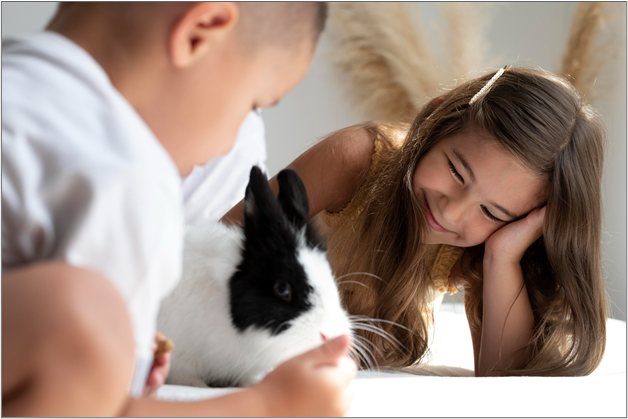
Introduction: Your Pet Has a Love Language Too
Your dog may not bring you flowers, but has he dropped a slobbery tennis ball at your feet for the fifth time today? That’s essentially a love letter.
The strange thing about pets is that they are continuously speaking with us—we just don’t always understand their language. Some pets follow you around like little emotional support shadows. Others sit quietly close, providing support without seeking attention. Then there are the dramatic ones who stare at you as you eat, thinking you owe them half of your sandwich.
That’s where the concept of a pet love language becomes startlingly plausible. Understanding those little cues can drastically change how you interact with your pet. Just like humans, pets show affection in a variety of ways. Love can take the form of cuddles. Sometimes it appears to be protection, loyalty, or simply refusing to let you use the restroom alone.
But the best part? When you recognize your pet’s special style of expressing affection, routine situations become much more meaningful. So, let’s take a look at the humorous, uplifting, and oftentimes puzzling world of pet love languages—as well as the hints you’ve probably been missing all along.
1. Quality Time: The Clingy Shadow Love Language
“If I Follow You Everywhere, It Means I Like You”
Some pets care more about being near you than they do about toys or treats. Here are the pets who:
- Follow you from room to room.
- Sit by your side as you work.
- Wait outside the bathroom like mini security guards.
- Act offended when you close a door.
This sort of pet love language emphasizes presence. They don’t often need engagement; rather, they simply want to be in your space.
Why It Feels Sweet But Slightly Unsettling
At first, it’s cute. Then you realize you haven’t been walking alone in months.
But really? Their loyalty is quite touching. To them, your company is the activity.
2. Physical Affection: The Cuddle Experts
The Pets Who Think Personal Space is Optional
Some pets show their affection physically and unapologetically. You recognize the type:
- The dog who rests its entire bodily weight on you.
- The cat who thinks your laptop is actually a bed.
- The pet who nudges your hand until you stop working and begin petting.
Thus, affection acts as a source of comfort for these pets, and touch means connection.
But Not Every Pet Speaks ‘Cuddle’
This is where many owners become confused: not all pets prefer constant physical affection.
Some people express love by merely sitting nearby. Others become overwhelm by excessive touching. Understanding the pet love language also means respecting their boundaries—not imposing affection just because you want cuddles!
Sometimes the most loving thing you can do is to give them space.
3. Gifts and Surprises: Weird Little Love Offerings
Yes, That Random Sock Was Meant For You
Few things are more perplexing than finding a random home item proudly brought to your feet.
Pets enjoy offering “gifts,” including socks, sticks, toys, leaves, and things they definitely should not have stolen.
To us, it appears silly. But to them? It is meaningful.
The Real Meaning Behind the Chaos
Many pets carry items as a means of:
- Inviting play
- Sharing valuable possessions
- Getting attention
- Expressing excitement
This pet love language may not be eloquent, but it is genuine.
And, honestly, there’s something very flattering about being presented with a damp tennis ball as if it were a treasure.
4. Acts of Service: The Quiet Protectors
Love Doesn’t Always Look Loud
Moreover, some pets express affection in more subtle, protective ways. They may:
- Sleep near your door.
- Check on you while you are sad.
- Stay unusually watchful around strangers.
- Sit near when you feel unwell.
These pets aren’t always too affectionate, but they are quite attentive.
The Comfort of Silent Loyalty
There’s something special about a pet that recognizes when you need comfort.
No words. No huge gestures. Rather, it’s just presence.
This kind of pet love language emphasizes that affection does not always have to be loud to be important. On a bad day, love can take the form of silent companionship.
5. When Humans and Pets Misunderstand Each Other
The Problem with Assumptions
One of the most common misunderstandings pet owners make is assuming that all pets display affection in the same way.
However, much like humans, pets have personalities and interests. A few frequent misunderstandings are:
- Assuming avoidance means dislike.
- Forcing interaction when pets want their space.
- Ignoring stress cues.
- Mistaking overstimulation for excitement.
Learning Their Emotional Preferences
The best relationships develop when we stop expecting pets to behave like humans and instead focus on who they truly are.
Understanding pet love language is primarily about observation. The closer you pay attention, the more obvious their emotional cues become.
6. Your Pet Might Be Changing Your Love Language Too
The Unexpected Emotional Shift
Here’s the funny part: while you learn your pet’s behaviors, they are quietly modifying your own.
You become more patient, present, emotionally aware, and appreciative of small moments. And thus, the routines that used to irritate you begin to comfort you.
Connection Changes the Way We Show Love
Your pet teaches you that love does not have to be theatrical all the time. Consistency is sometimes all that is needed. Showing up. Sharing space.
And maybe that’s why these partnerships are so comforting: they simplify affection in a society that often complicates it.
In Conclusion
The wonderful thing about pets is that they love without thinking about it. Their adoration may manifest as cuddles, loyalty, bizarre small gifts, or simply refusing to leave your side, but it is genuine all the same.
Understanding your pet love language can help you connect with them in ways that many owners don’t anticipate. Suddenly, seemingly little activities take on new meaning. Quiet moments matter more. The bond feels stronger.
And perhaps that is the true joy of pet ownership: understanding that connection does not always require words.
If you loved exploring the emotional connections between pets and humans, Jamie Young’s Too Late to Say Goodbye is a moving narrative about connection, care, and friendship that brilliantly captures the significant relationships we form with the animals who become a part of our lives.